


The first essay in this series asked what would remain if your account disappeared tomorrow, and one of its questions was simple: would money still move? This essay is that question grown into an argument.
A man can speak freely every evening and remain a hostage every morning. He says what he thinks online, then goes to work for an employer who would dismiss him if his name surfaced, banks with an institution that would drop him on instruction, and buys everything he owns from companies that fund his opponents. He has made a cultural exit and no economic one. He is not free. He is on parole.
Movements can live on parole too. They build publications, communities and schools of thought on infrastructure owned by people who want them gone, and they fund the work with donations that travel across the same hostile ground. The previous essays in this series asked who carries the work: the members, the founder, the community, the successors. This one asks what carries them.
The lesson we paid for
From the beginning, we built our own systems. Membership registers, mailing infrastructure, paywalled media, forums: the principle was that member data never sits on someone else’s servers, because our members risk more than cancelled subscriptions if it leaks.
Once, we broke our own rule. We rented an external forum service instead of building one, and political opponents managed to fish email addresses out of it. The addresses were used for doxxing. The exposure was full of errors, guessed identities, people labelled members who had never been members, since the forum was open to outsiders too. None of that made it less frightening for the people exposed, and none of it makes the failure smaller on our side. We abandoned our principle once, and others paid for it.
Independence is usually discussed as a matter of resilience. It is also a matter of security. Every rented service is someone else’s promise, and your members’ safety is only as strong as the promises you have outsourced.
The rug
Leakage is one risk of rented ground. Removal is the other. When we started our first podcast in 2012, it climbed Apple’s charts quickly. Then we were removed from the directory: not for breaking a law, but for being politically unacceptable. Others in our circles built their reach on Soundcloud or Facebook and watched the rug pulled the same way.
Shortly after we launched our membership organisation, PayPal closed our account. Nearly three hundred subscriptions sat in that system. We emailed every one of them with new payment instructions, and many never returned. The loss was not symbolic. It was months of income, weeks of extra work, and members we never saw again. Years later our bank followed; I have told that story earlier in this series.
Notice what these episodes have in common. No trial, no appeal, no drama. Financial and infrastructural exclusion is the regime’s cheapest weapon: it takes a compliance officer one afternoon, and it costs your organisation a year. Infrastructure you rent from people who dislike you is not infrastructure. It is a lease that ends the day you become inconvenient.
The honest limit
Full exit is impossible; pretending otherwise is fantasy. We still depend on payment processors; everyone does. Money has to enter the organisation somehow, and the rails belong to others.
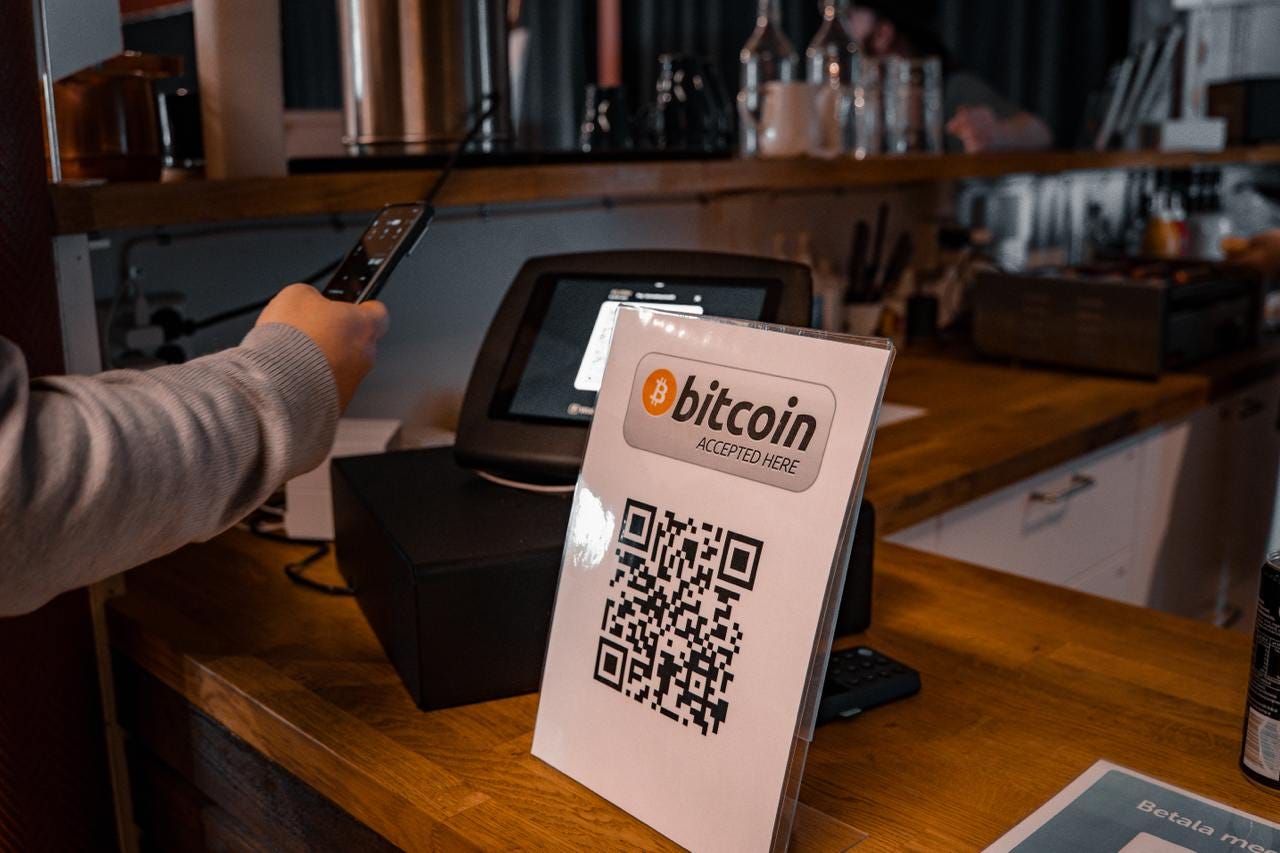
We try to reduce the exposure. We teach our members Bitcoin Lightning, which would make us far less sensitive to deplatforming and political persecution. Very few are willing to learn a new technology, even one that protects them. Convenience beats resilience, right up until the day it does not.
There is also a dependency I have chosen, and you are looking at it. This essay is published on Substack, a platform that could remove us tomorrow. But I use it the way a man uses a public square: to speak where the crowds already are, and to meet people who would never have found us otherwise. The square is for reaching people. The house is where they can come afterwards, and the house is ours: our own membership systems, our own media, our own infrastructure.
So the goal is not autarky. It is layered dependency: knowing which rails you run on, having a second rail ready, and never letting one provider’s afternoon decision become your organisation’s obituary. Rent your reach if you must. Never rent your home.
From donations to production
Most dissident projects live on donations, and the donation model has three flaws. It travels on hostile rails, as our PayPal account demonstrated. It follows enthusiasm, surging with every scandal and starving in every quiet month. And it tends to fund personalities rather than institutions, because outrage is easier to donate to than infrastructure.
There is also a quieter cost. A movement that only asks becomes a beggar, and a beggar adapts to his benefactors’ moods. A movement that sells something people actually want, a magazine worth reading, courses worth taking, books worth owning, events worth attending, membership that delivers something real, becomes a producer. Producers plan. Beggars hope.
Donations still have a place; some work will never pay for itself. But they should top up an economy, not be one.

Who can afford to be visible?
Every dissident with a mortgage and a hostile employer has a censor living in his head. The most important economic question a movement faces is therefore not how to fund the next campaign but who can afford to be visible at all. As long as livelihoods sit in the hands of opponents, the movement’s public voices will be the retired, the independently wealthy, the anonymous and the reckless. Everyone else stays quiet, whatever they believe.
I know which of the four I was. In 2015 I resigned from a well-paid consulting job to work full-time on our podcast and media. We had barely any revenue, and I had a one-year-old son at home. It felt like now or never, and with savings and creativity we built something over the following years that put food on the table and kept the house warm. I do not regret it. I also cannot recommend it as a system. A movement whose only full-time entry ticket is that gamble will be staffed by gamblers, and it will lose every careful, competent family man who looks at the maths and quietly closes the door. The point of building a movement economy is that the next man should not have to be reckless.
Conviction is not a salary
The answer is employment, and here I will be honest about both the scale and the lessons. Over the years, our organisations have employed several people, and we hired the first of them with a founder’s assumptions. We who had been the reckless ones took it for granted that others would work as hard for as little, carried by the same idealism. Some did, for a while. But there is a difference between founders and employees that we had to learn at their expense as well as ours. A founder’s sacrifice is chosen: the project is his, and every unpaid hour builds something he owns in the deepest sense. An employee has made no such choice. He has a job, and idealism can subsidise a wage for a while before it wears down into exhaustion or quiet resentment. Conviction is not a currency you can pay other people in. Either the work carries a real salary, or it should remain volunteer work with honest limits. The movement economy we need is one where the first option stops being rare.
Today, two of us work full-time on the project, and I take on outside consulting to ease the burden on it. Through the companies I have run outside politics, I have employed people from our movement. Through publishing and magazine ventures, we have paid writers modest sums for their work.
After more than twenty years of building, that is the base I can report, and I state it as a diagnosis rather than a complaint. This is the normal condition of our environment: a movement rich in conviction and poor in salaries. Part of the reason is arithmetic. Sweden has ten million inhabitants, roughly seven million of them ethnic Swedes: a small market for dissident media and literature, too small to carry many full livelihoods. Arktos, built by a countryman of mine, answered that by going international and can pay authors and staff in ways a purely Swedish operation rarely can. That is worth applauding, and worth copying; the publication you are reading is written in English for the same reason. But every voice that falls silent for economic reasons was silenced as effectively as by any censor, and more cheaply.
Circulation
Exporting is one answer to a small home market. The other is circulation. An economy is not a pile of money but a pattern of transactions, and a movement’s economic strength is measured in how many times a krona changes hands inside it before it leaks out.
So we work on the circulation. We have helped members start their own companies. We connect them with accountants and bookkeepers who are also members. We encourage everyone to buy from each other first: the tradesman, the printer, the designer, the farm. None of this shows up in a donation report, and all of it builds the economy. A community whose members employ, hire and supply one another has started to become what the final part of this series will describe: an ecosystem rather than an audience.
Follow the money for ninety days
Here is the test, in the spirit of this series. Take ninety days and follow your organisation’s money. How much of it enters through rails your opponents control, and what is the second rail if the first is cut? What do you sell, as opposed to what do you ask for? How many people can your movement pay, full-time or in part, and how many of its best voices stay silent to protect their jobs? When a member spends money, does any of it reach another member?
The answers will be uncomfortable. Ours are. But the account test in the first essay asked whether money would still move, and this essay has only extended the question: money that moves through your enemies’ hands is borrowed motion.
Exit is not a place you escape to. It is an economy you build, transaction by transaction, salary by salary, until the people who want your movement gone no longer control whether it eats.
■
The Builder’s Map
This essay is the sixth part of The Builder’s Map, a series on turning dissent into durable institutions. A new part is published every Thursday.
Why the Right Keeps Mistaking Attention for Power: how attention becomes real power
A Movement That Cannot Train People Does Not Exist: how people are formed for responsibility
Your Movement Should Survive Thirty Days Without You: how the project outgrows its founder
Why Communities Become Clubs: how a community loses its mission
The Succession Test: how an institution survives its first generation
Exit Requires an Economy: you are here
An Ecosystem Is Not an Audience: how the parts become a whole (13 August)
Next Thursday, the series concludes: a movement’s strength is not the size of its audience but the transactions between its institutions.